Cotonou is the largest city and economic centre of Benin, on the Gulf of Guinea in West Africa; the official capital is Porto-Novo 40 kilometres to the north, but government and embassies are largely here. The city is built on both sides of the channel that links Lake Nokoué to the sea, and its port is also the sea gateway for Niger and Burkina Faso. Yellow shirted zémidjan motorcycle taxis are the most common way around the streets. Benin is the homeland of Vodun, with an official Vodun holiday every 10 January, and the slave port of Ouidah and the royal palaces of Abomey are day trip history stops.
Looking for cheap flights or monthly payment flight packages to Cotonou?
Suso is a travel-planning platform that turns your Cotonou trip from Turkey into a buy now, pay later flight package: the ticket is issued by travel agencies, booking sites or airlines, and the payment plan runs on consumer credit from partner finance institutions. One click in the basket completes the purchase and the financing together; you pay over 3 to 24 months. No credit card limit needed.
See flights to Cotonou →When to visit Cotonou
November to February is the dry season and the easiest period, with daytime temperatures of 30C to 33C, low humidity and, in December and January, the harmattan wind from the Sahara that makes the air hazy but cooler. April to July is the long rainy season with June the wettest month; August brings a short dry break and September to October the second rains. Temperatures never fall below 27C and the sea is warm all year.
Things to do in Cotonou
Dantokpa Market
Spreading over 20 hectares on the bank of the Lake Nokoué channel, the market is among the largest open markets in West Africa and tens of thousands of people shop here each day. There are sections for cloth, spices, electronics and live animals; the best known corner is the fetish section where Vodun ritual goods are sold. Go early in the morning and carry bags in front of you.
Ganvié Stilt Village
Built on stilts in the middle of Lake Nokoué, the village of more than 20,000 people was founded in the 17th century by the Tofinu people as a refuge from slave raiders, whose Fon warriors were forbidden by their beliefs to enter water. Every building, including the school, the market and the mosque, stands over the water and transport is by canoe. Boats leave from the Abomey-Calavi jetty 20 kilometres north of the centre, and the trip takes three hours in all.
Zinsou Foundation
Opened in 2005, the foundation was among the first private institutions created to show contemporary African art in Africa, and its exhibition space in Cotonou is free. The masks made from plastic jerrycans by the Beninese artist Romuald Hazoumè are the best known pieces in the collection. The foundation's museum in Ouidah occupies Villa Ajavon, an Afro-Brazilian style mansion of 1922.
Door of No Return, Ouidah
Ouidah, 40 kilometres west of Cotonou, was one of the largest ports of the Atlantic slave trade between the 17th and 19th centuries. The four kilometre Slave Route down from the town to the shore, with stops such as the tree of forgetting, ends at the concrete memorial arch raised on the beach in 1995. Reliefs and sculptures along the way tell the history, and a morning visit is cooler.
Temple of Pythons, Ouidah
In the centre of Ouidah, directly opposite the basilica of 1909, the small temple houses dozens of royal pythons; the snake is sacred in the town's Vodun belief and the temple lets visitors take one on their shoulders. The church and the temple standing face to face is the best known image of faiths living side by side in Benin. The visit takes half an hour.
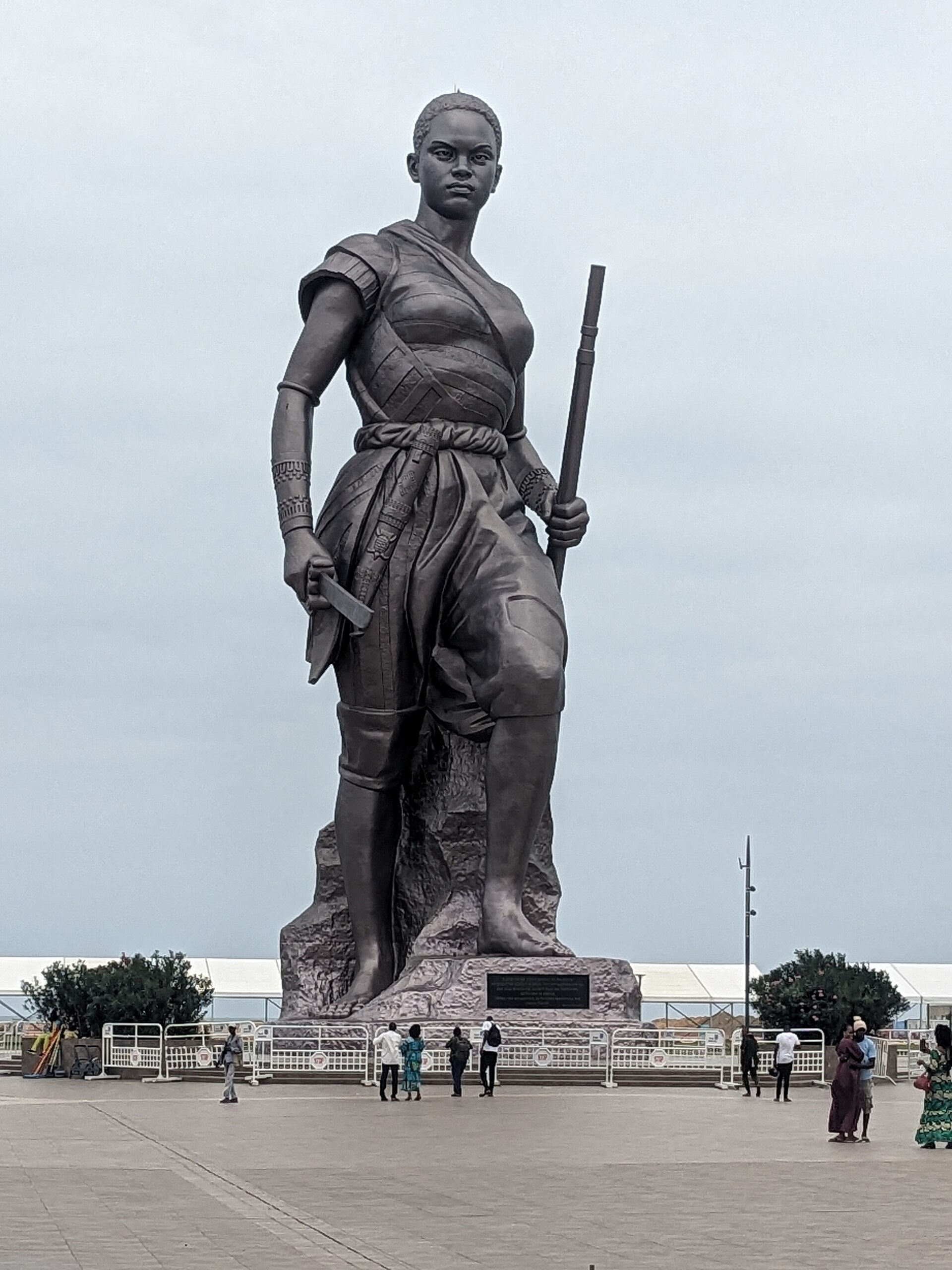
The Amazon Monument
The 30 metre bronze statue unveiled in 2022 on the seafront Marina boulevard represents the all female warrior regiments of the 19th century Kingdom of Dahomey, the Agodjie whom Europeans called the Amazons, and has become the new emblem of the city. The wide square in front fills in the late afternoon for walks and photographs, and the Fidjrossè beach beside it is lined with open air restaurants grilling fish. The surf of the Gulf of Guinea is strong, so the marked sections are used for swimming.
Flights from Turkey to Cotonou
Direct flights to Cotonou from Turkey leave from Istanbul Airport, operated year round by Turkish Airlines on four days a week, and take about 7 hours. Departures are in the afternoon with arrival at night, so the first night's stay should be arranged in advance, and since flying days are limited the return date is planned around them. Cadjehoun Airport is inside the city, about 5 kilometres from the centre and 15 minutes by taxi.
Cotonou FAQ
How many days do you need in Cotonou?
The market, the Zinsou Foundation and the beach take a day; a second goes to Ganvié and a third to Ouidah. Adding the royal palaces of Abomey or Pendjari National Park in the north stretches the trip to a week.
How far is the airport from the city centre?
Cadjehoun Airport is on the western side of the city, about 5 kilometres from the centre. A taxi takes 15 to 25 minutes; the fare is agreed beforehand as there are no meters. Most hotels offer an airport pickup, which is the better choice for a night arrival.
Do you need a visa for Benin?
A Turkish passport needs a visa, applied for online through the official e-visa portal; a 30 day tourist visa arrives by email within a few days. A yellow fever vaccination certificate is required on entry, and the vaccine must be taken at least ten days before travel. Malaria risk exists all year, so consult a doctor about prophylaxis before the trip.
Buy now, pay later flights to Cotonou
Fly now, pay later. Plan your trip, pay over up to 24 months. One click at checkout sets up the plan, no credit card limit needed.
Search flights to Cotonou →